

Outdoor drains flow directly into our streams, estuaries and out to sea. Simple behaviour change can make an immediate difference to the health of our environment.
Watch
Not sure where to start? Our step-by-step animation makes it easy.
of New Zealand’s indigenous freshwater fish species are threatened with extinction or at risk of becoming threatened
Source: Our Freshwater 2026, Ministry for the Environment, April 2026
Why it matters
When paint wash-off goes into an outdoor drain, it can flow directly into local streams, estuaries and eventually the sea. Once there, paint will harm aquatic life, smother stream habitats, reduce water quality and affect the wider food web.
While sediment remains one of the region’s largest environmental pressures, paint pollution is something we can prevent at the source — by changing how paint equipment is cleaned and how leftover paint is handled.
Discharging contaminants into waterways, or onto land where they may enter waterways, is breaching the Resource Management Act 1991 and will result in enforcement action.
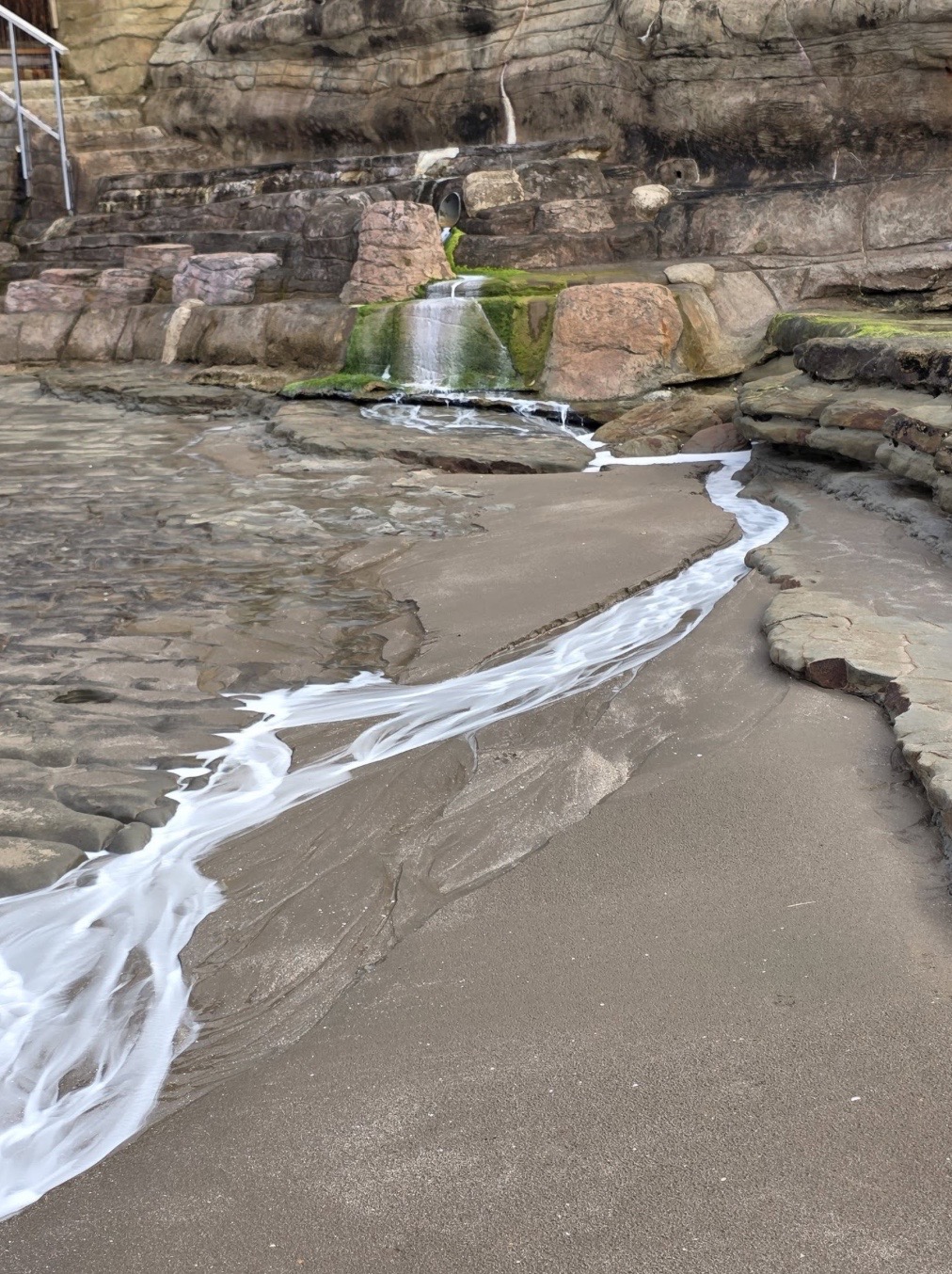
Local evidence
Stream advocate and water quality monitor Viv Walker has spent years undertaking quarterly stream monitoring across the Hibiscus and Bays region, regularly assessing water clarity and other key indicators.
During this work, Viv and the wider Restore Hibiscus & Bays team have witnessed a concerning increase in paint pollution entering local waterways. Social media posts across local community pages have highlighted growing frustration about painters washing paint equipment into drains and streams.
At the 2025 Wai Care Convention, water quality monitors from across Auckland confirmed they were seeing similar paint contamination issues in their own regions.
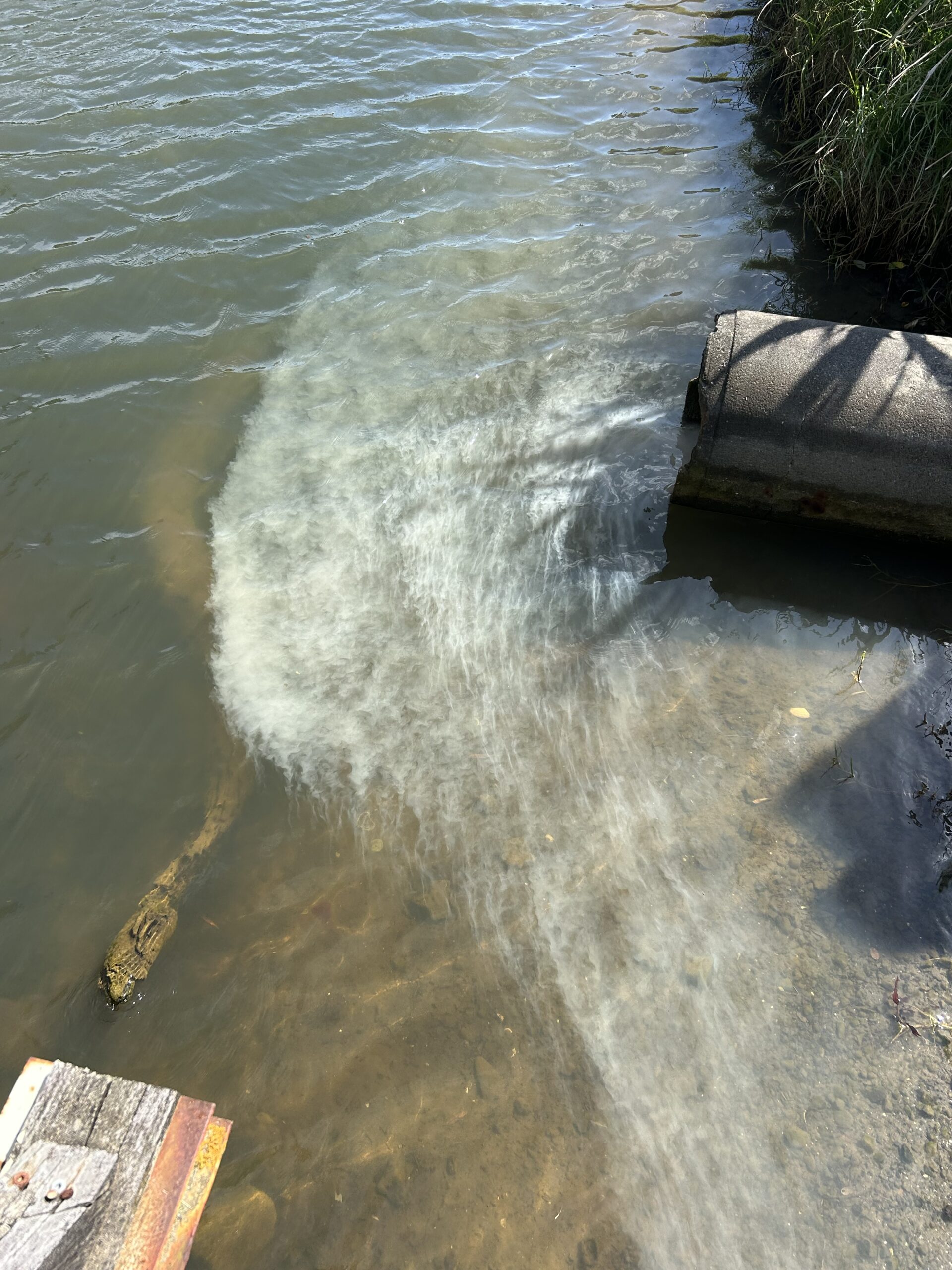
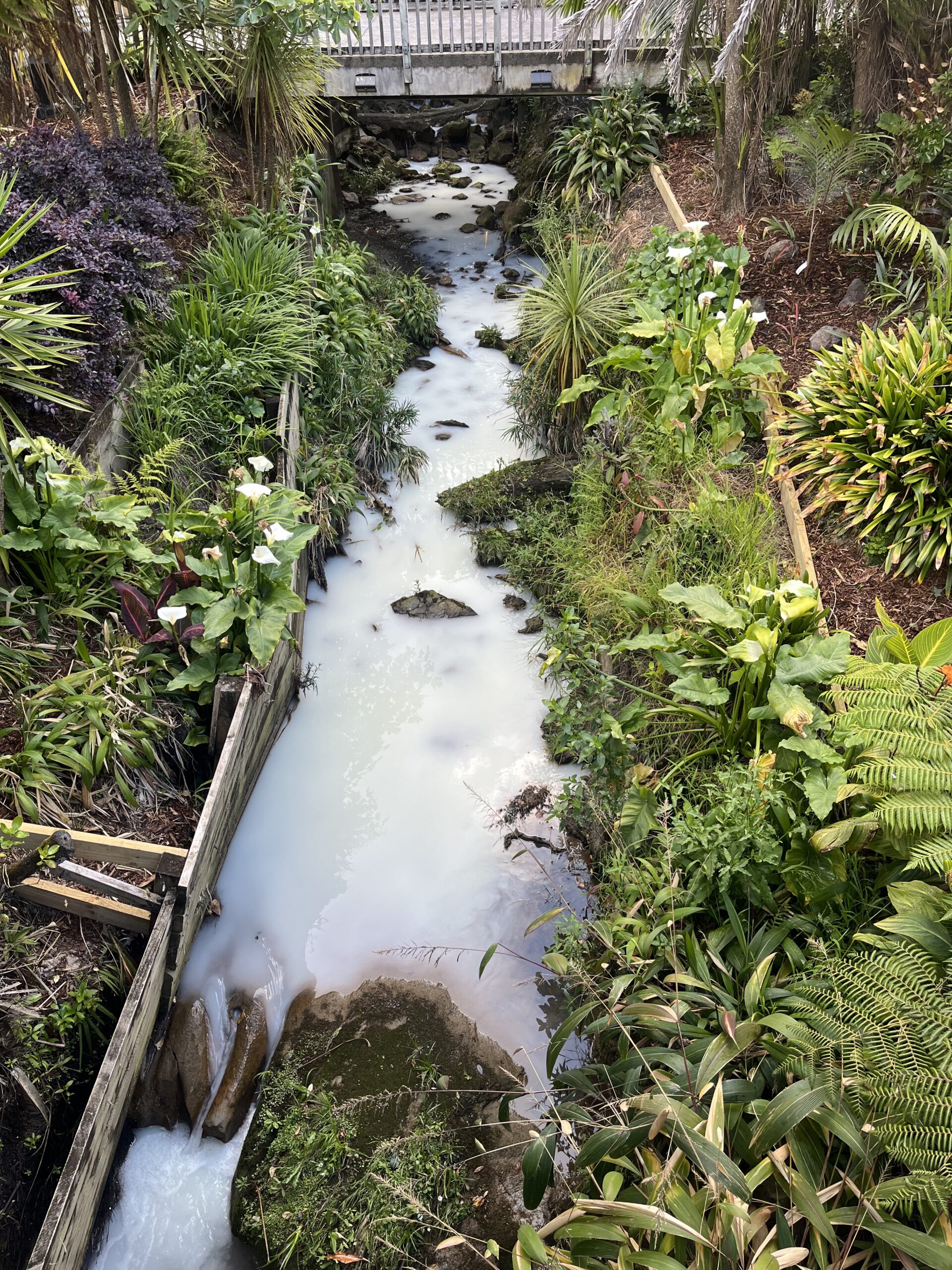
Environmental monitoring helps us understand the scale of the issue, measure change over time and guide effective solutions.
Paint causes severe ecological damage by introducing toxic chemicals, depleting oxygen levels, and physically smothering aquatic life. Washing even small amounts of paint down stormwater drains devastates local waterways.
Paint solids coat the natural stream bed, smothering aquatic plants, insect habitats and eggs — while clogging the gills and eyes of fish, making it impossible for them to breathe or see.
Chemicals and contaminants reduce water quality and affect ecosystems from streams to estuaries.
Act quickly
Observe your local awa — this will help you notice pollution events. If you see paint, cloudy water or other pollution entering a drain or local stream, please report it as soon as possible.
Take photos or video of the pollution and note the exact location.
Call the Auckland Council Pollution Hotline right away.
If it is safe to do so, follow the pollution upstream to help identify the source.
Auckland Council Pollution Hotline
09 377 3107What can you do
The right method depends on whether you’re using water-based or solvent-based paint. Here are simple, waterway-safe ways to clean up — at the end of a job, or between jobs.
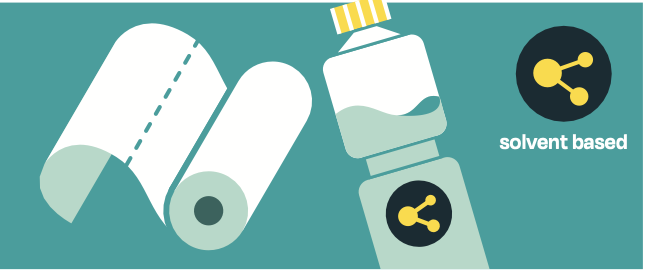 Solvent based
For solvent-based paint, dip your brushes in turps and wipe them clean with a rag or paper towel.
 Water & solvent based
This technique reduces paint into a more solid state, making it easier to dispose of responsibly. See the full step-by-step →
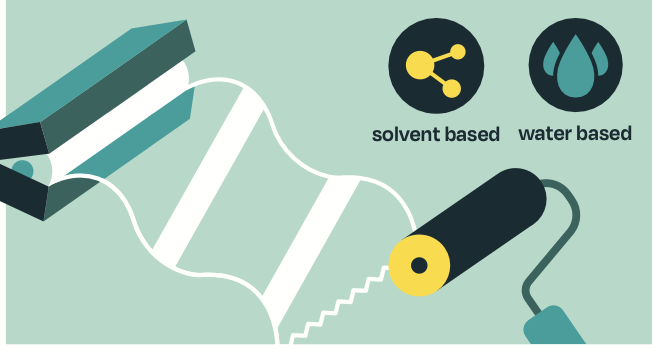 Water & solvent based
Wrap paint brushes in cling wrap to prevent paint drying on the brush. Similarly, put your roller into a plastic bag and tape it around the handle.
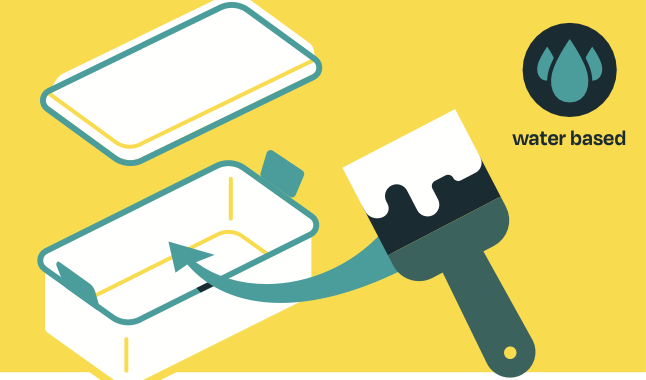 Water based
A sealed container with a tight-fitting lid is ideal between jobs. Fill it halfway with water so brushes and rollers are covered — saving you from cleaning in between.
 Commercial painter?
Use on-site paint wash systems if available. If one isn’t present, we recommend using one of the methods above.

Rather than throwing away unwanted paint, we recommend recycling it where appropriate. Many paint manufacturers provide drop-off locations for leftover paint. Talk to your local paint store about recycling your unwanted paint and the facilities they offer to help.
The campaign
Through collaboration, education and community action, we can help protect the streams and coastlines of the Hibiscus and Bays region for future generations.
Help people understand that outdoor drains lead directly to streams, estuaries and the sea.
Support safer paint clean-up practices that protect native taonga species and local waterways.
Encourage households, painters, retailers and local communities to take practical action.
Help keep paint and contaminants out of waterways so stream and coastal ecosystems can recover and thrive.
For paint retailers & trade stores
The No Paint In Drains campaign aims to create long-term behaviour change through education at the point of purchase.
Campaign materials include flyers, stickers, pull-up banners, QR codes and a short multilingual animation — designed with clear visual imagery — that link people to easy-to-follow guidance on safer paint clean-up practices, for both DIY and commercial painters.
Display campaign materials in-store and online to support safer paint clean-up and help protect local streams, estuaries and coastlines.
Request campaign materials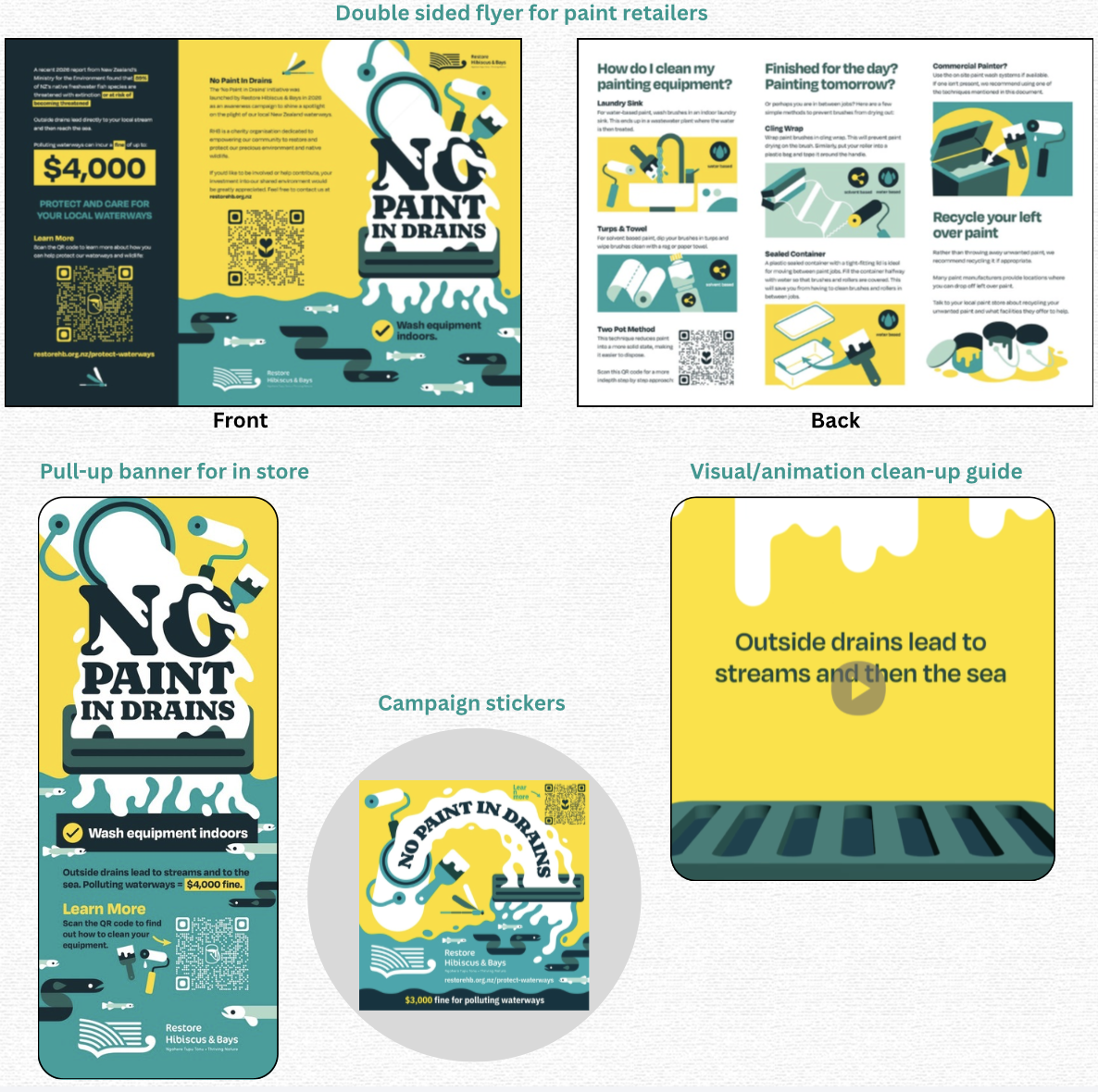
Backed by the community
Get involved
Want to help protect local streams and coastlines? We’d love to hear from you.
Volunteers can support the campaign by helping share resources, connect with local businesses, monitor local waterways, distribute campaign materials, or get involved in wider stream restoration mahi across the Hibiscus Coast and East Coast Bays.
Get in touchProtect the streams, estuaries and coastlines of the Hibiscus Coast and East Coast Bays for future generations.
restorehb.org.nz/protect-waterways