Stanmore Bay Wetland: Growing a Living Classroom and Community Hub
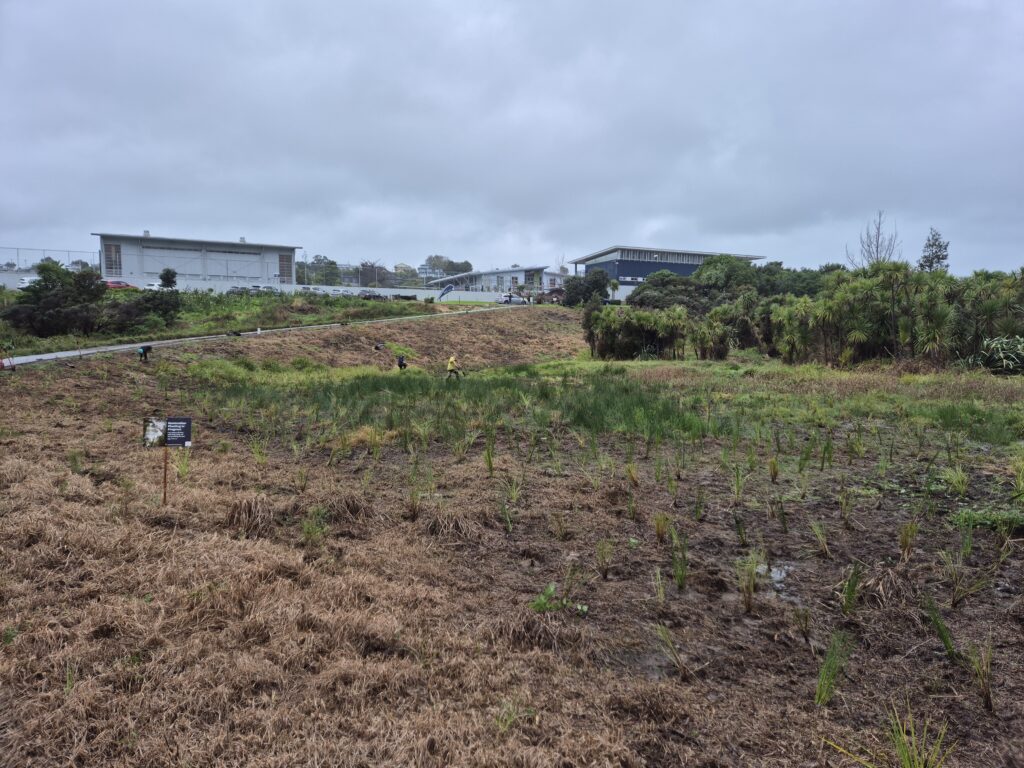
The Stanmore Bay Wetland is a 3.5-hectare site on the grounds of Whangaparāoa College, featuring two stormwater ponds and natural wetland seeps that support a rich variety of plant and animal life.
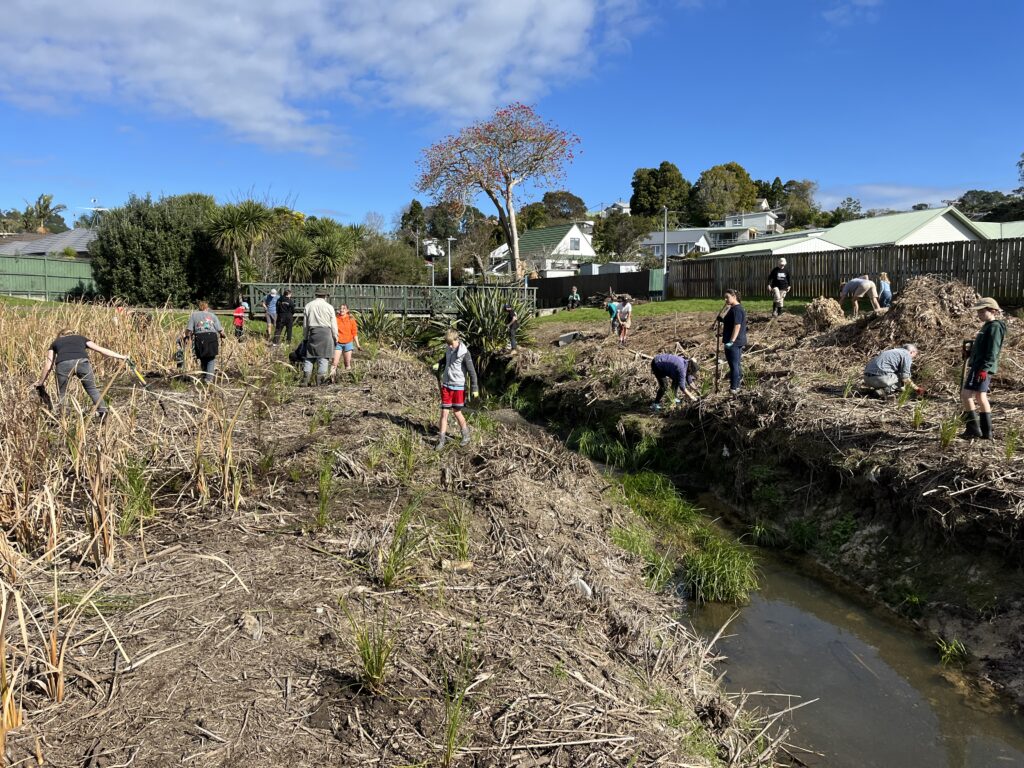
Restoration began in 2021 with funding from Auckland Council Healthy Waters, focusing on major pest plant control and large-scale native planting. In 2024, Restore Hibiscus & Bays (RHB) helped build community momentum by establishing a dedicated group of teachers, students, and local residents, with regular monthly working bees kicking off at a highly successful Father’s Day planting.
From July 2025, RHB took on the ongoing management of the site, further strengthening connections between the school, the local community, and the wider catchment.
Big Planting Year in 2025
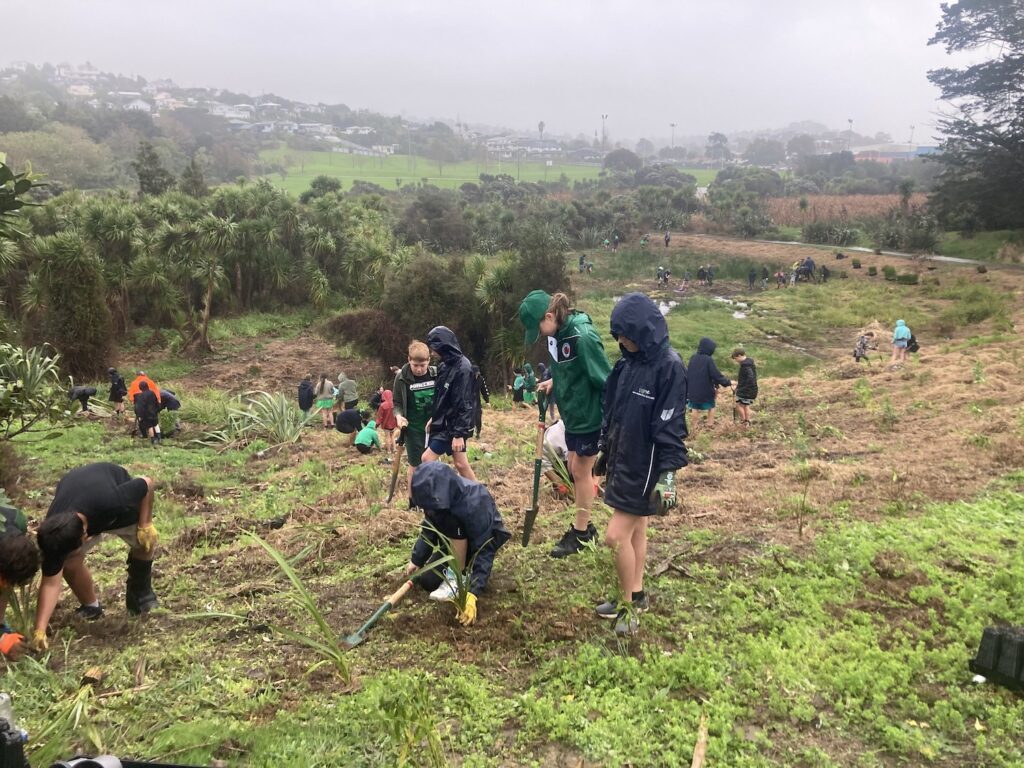
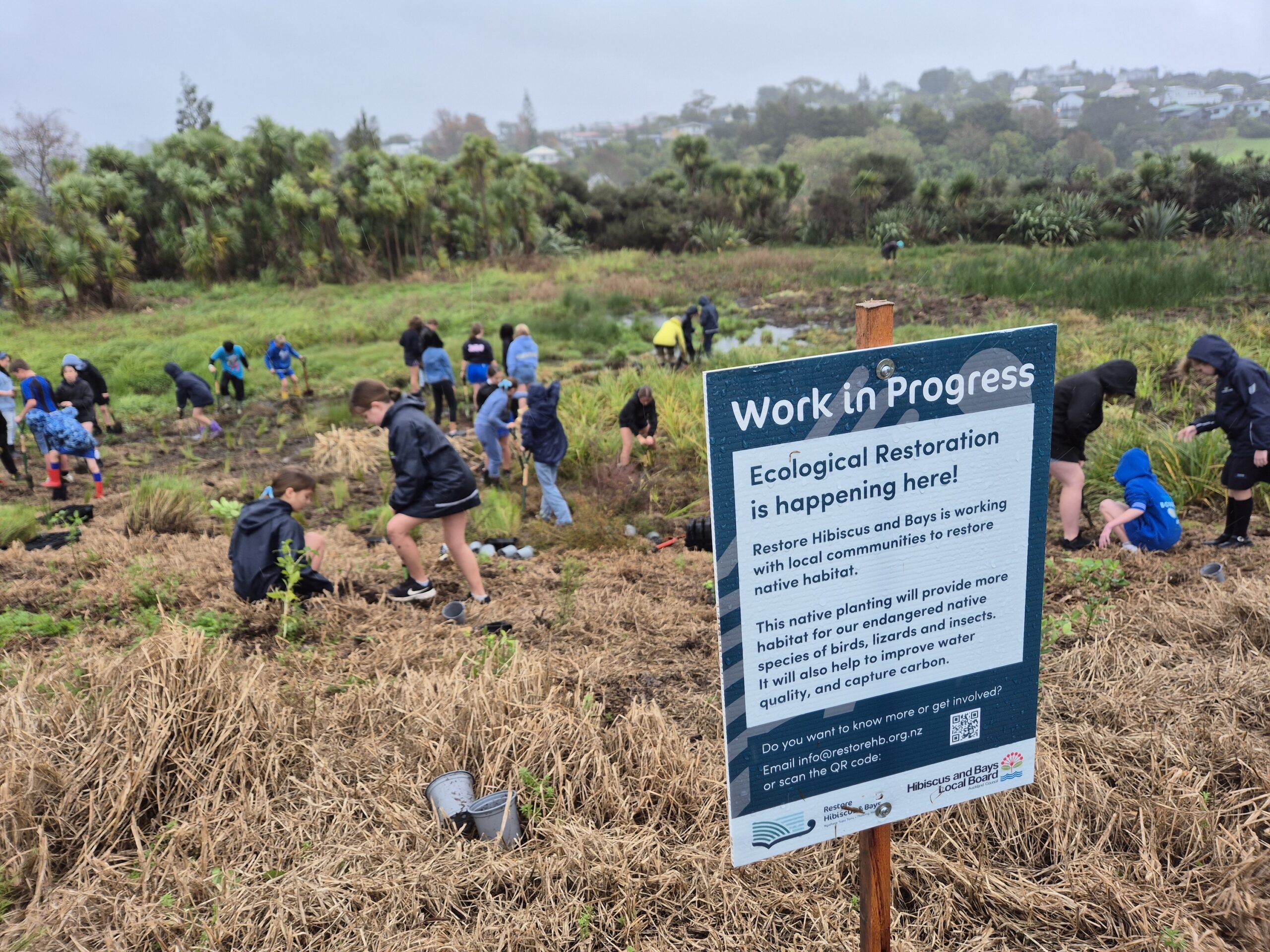
Nearly 5,000 native plants were added to the wetland in 2025 through a mix of school-led and community events. Highlights included:
- 2,467 plants planted by 250 Year 7 students during a House Day, funded through Auckland Council’s Mana Ora Youth Resilience – Sustainable Schools programme, led by Maria Sinclair (RHB Volunteer of the Year).
- A large community planting day with around 80 volunteers, supported by Conservation Volunteers NZ and WaiCare, where 2,096 plants were planted — with BBQ and barista coffee provided by Healthy Waters and catered by Whangaparāoa College Food Technology students.
- 416 plants planted by the Year 7 Kaitiaki group, continuing their role as guardians of the wetland.
Summer Maintenance and What’s Next
Over summer, a locally trained team is carrying out intensive weed control to protect new plantings and tackle remaining pest plants, ensuring the long-term success of the restoration. Looking ahead to winter 2026, plans are underway to plant a further 3,000 native plants, alongside ongoing water-quality monitoring to track improvements as the wetland continues to regenerate.
Together, students, volunteers, and the wider community are transforming the Stanmore Bay Wetland into a thriving ecological space — and a living classroom for future generations.