
Clean your painting equipment without polluting our waterways.
Follow this simple method to clean your painting tools without harming our waterways.
The outside drain is the stream.
Scroll down for step-by-step instructions.
Outdoor drains lead directly to local streams and then the sea.
28% of NZ freshwater fish species are threatened
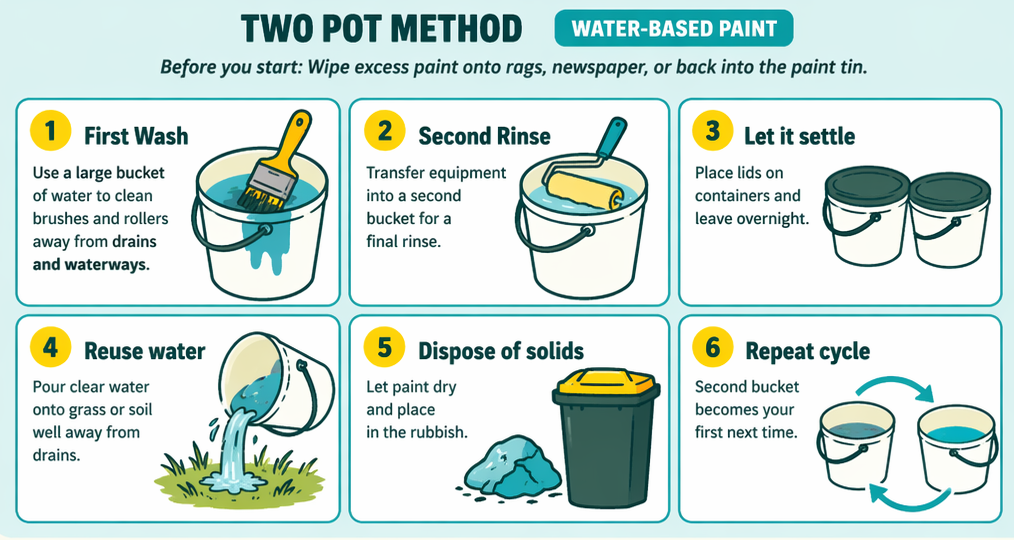
Before you start, squeeze or wipe as much paint as possible from your brush or roller onto old rags, newspaper, or back into the paint tin.
Use a large bucket of water to clean brushes, rollers and other equipment well away from waterways, drains and grates.
Transfer the washed equipment to a second bucket full of water for a final rinse.
Place lids on the containers and allow them to stand overnight.
In the morning, slowly pour the clear water onto a surface well away from waterways, drains and grates.
Stop just before you reach paint solids. Let the solids dry, then dispose of them in your general rubbish.
The second container, containing the rinse water, now becomes the first container next time.
The outside drain is the stream.