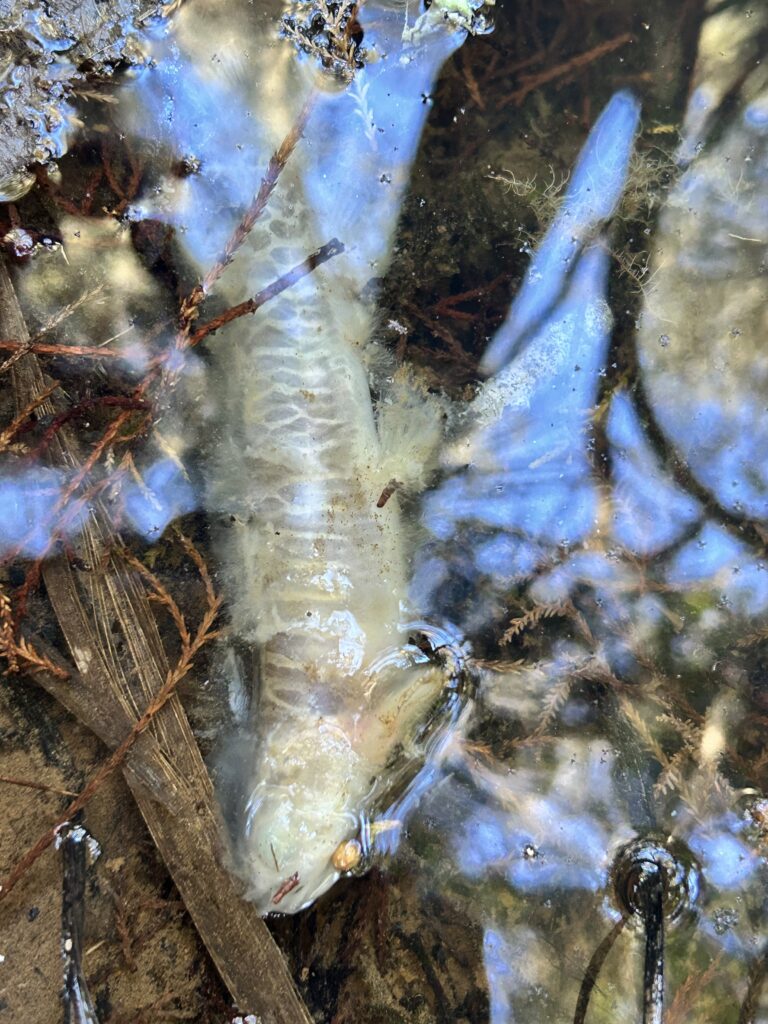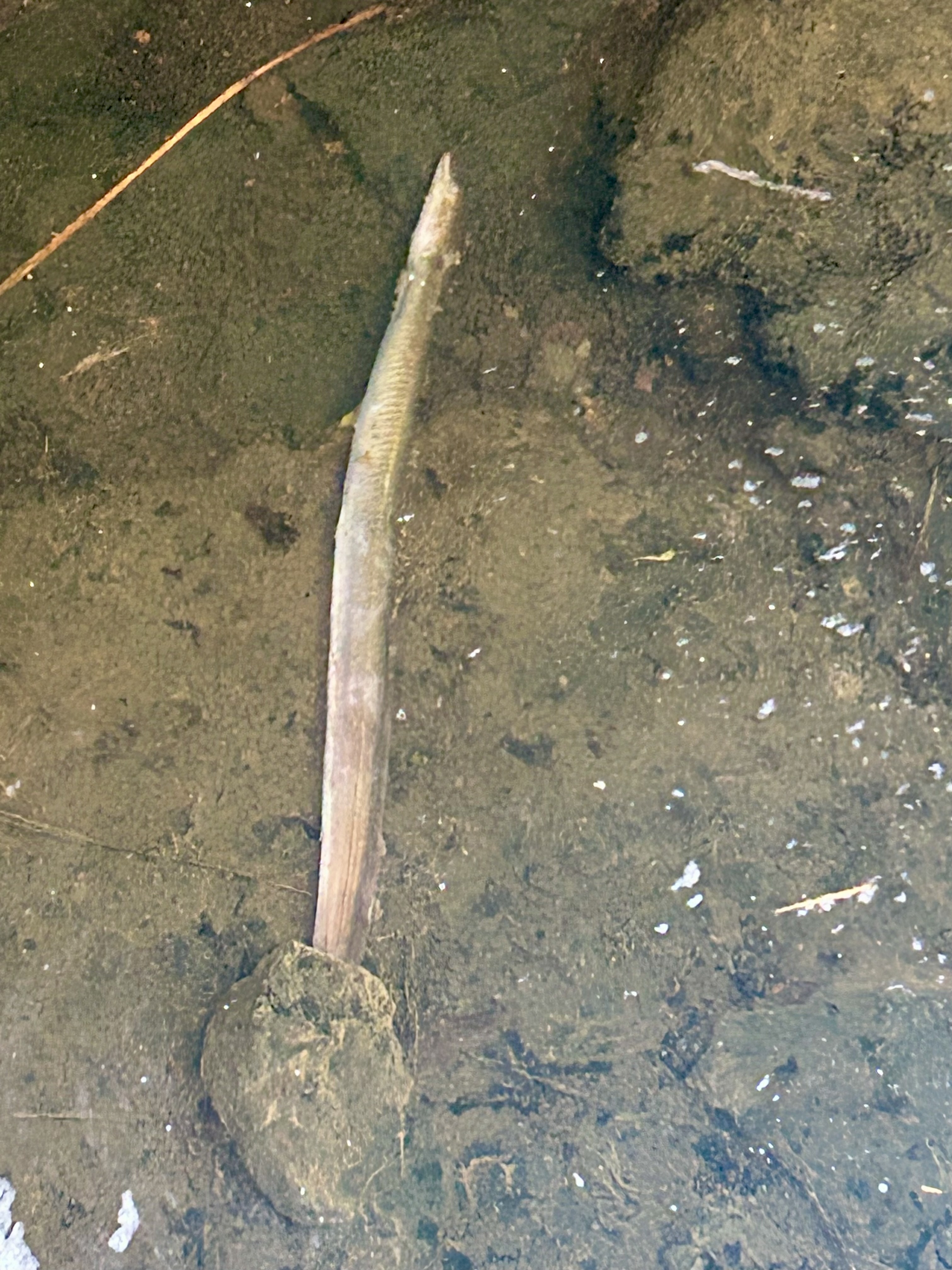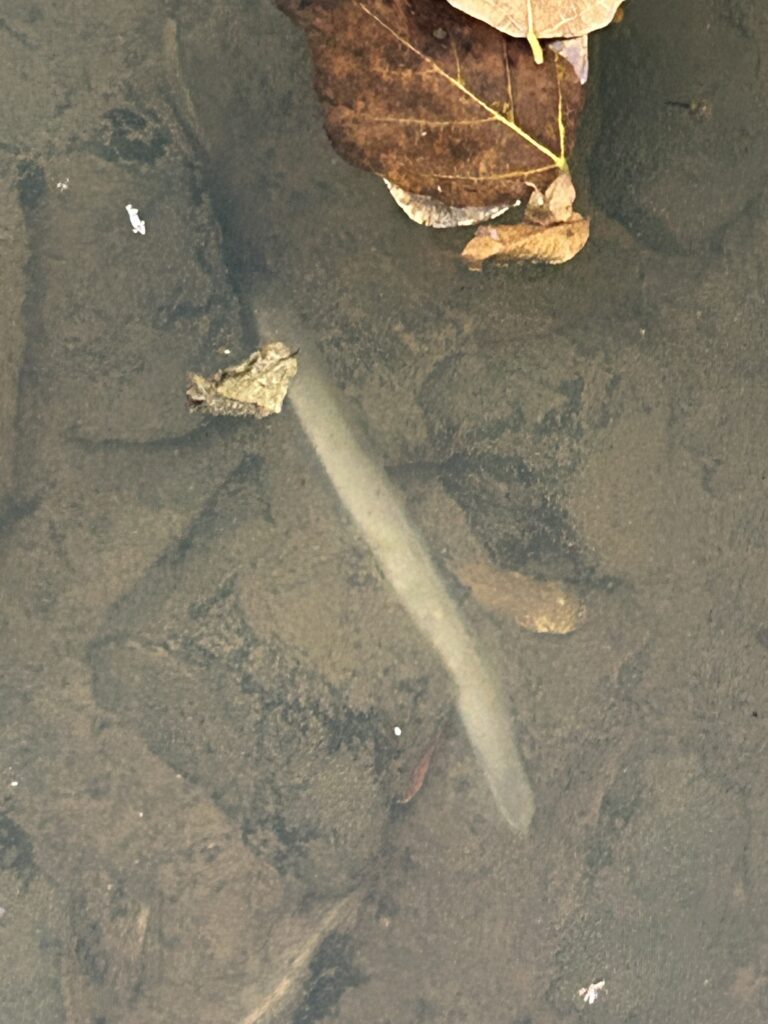
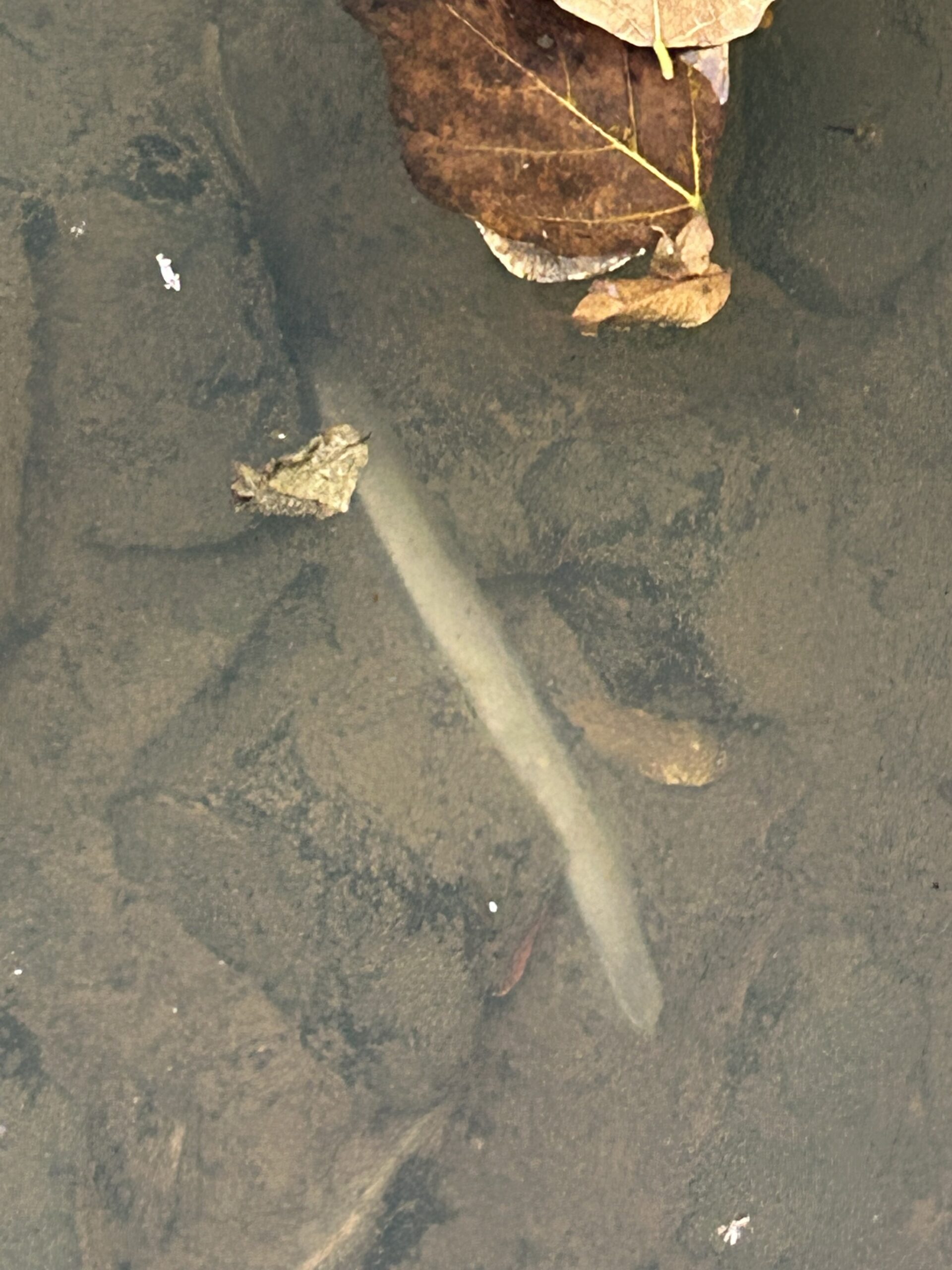
Hundreds of native fish killed in Campbells Bay pollution event
A suspected pollution event in a branch of Campbells Bay Stream has killed hundreds of native freshwater fish and tuna (eel) — a stark reminder that what goes down an outside drain flows straight into our streams and out to the sea.
On Monday morning, local volunteers discovered hundreds of dead fish and tuna throughout a branch of Campbells Bay Stream on Auckland’s North Shore.
The affected stream runs through a privately owned urban Significant Ecological Area and is home to native freshwater species including kākahi — a declining native freshwater shellfish — as well as banded kōkopu, bullies, tuna and other at-risk taonga species.
Based on the condition of the fish, the pollutant is believed to have entered the stream sometime over the weekend, likely on Saturday or Sunday morning.
Auckland Council Compliance and Healthy Waters teams attended the site. By the time water testing was carried out, parameters had returned to healthy levels, suggesting the contaminant had flushed through the system quickly. No source has yet been identified.
The only evidence left behind was the dead fish.
A serious loss for a fragile stream
The scale of the fish deaths — numbering in the hundreds — indicates the pollutant was highly toxic to aquatic life.
Kākahi appear to have survived, likely because freshwater shellfish can close their shells during a pollution event. Fish do not have the same defence.
For the volunteers, neighbours and community members who care for local streams, this is a significant loss. These waterways may look small from the roadside, but they are living ecosystems. They support native fish, tuna, shellfish, insects, birds and the wider coastal environment they flow into.
New Zealand’s native freshwater species are already under serious pressure, with 89% threatened with, or at risk of, extinction according to the Ministry for the Environment. Pollution events like this add further stress to species that are already struggling.
Restore Hibiscus & Bays’ Viv Walker spoke about the Campbells Bay pollution event and why stopping pollution at the drain is so important.
The outside drain is the stream
One of the most important messages from this event is also one of the simplest: stormwater drains are not treated.
What goes down an outside drain does not go to a treatment plant. It flows directly into local streams, then out to the moana.
That means paint, chemicals, wash water, detergents, plaster, concrete slurry, oils and other toxic substances can cause serious harm very quickly if they are tipped, washed or hosed into an outside drain.
“Many people still don’t realise that what goes down an outside drain is not treated,” says Viv Walker of Restore Hibiscus & Bays. “It goes straight into the nearest stream, then out to the sea. Paint, chemicals, wash water and other toxic substances can cause serious harm very quickly.”
This is why No Paint In Drains matters
Restore Hibiscus & Bays is preparing to launch its No Paint In Drains campaign, led by Viv Walker.
The campaign is designed to help residents, painters and tradespeople understand how to clean up safely without sending polluted water into stormwater drains.
It will provide simple, practical guidance for cleaning both water-based and solvent-based paint equipment, along with clear information about what should never be washed into an outside drain.
“Events like this are devastating, but they are also preventable,” says Walker. “The No Paint In Drains campaign is about making it really clear: the outside drain is the stream. Once people understand that, they can make simple changes that protect our freshwater species.”
Did you see anything?
Restore Hibiscus & Bays is asking anyone in the Campbells Bay area who noticed renovation work, painting, chemical use, washdown activity or anything unusual around stormwater drains over the weekend to contact Auckland Council.
Reports can be made confidentially.
Auckland Council Pollution Hotline: 09 377 3107
Even small pieces of information may help.
What you can do to help protect local streams
You can help prevent pollution events by keeping all paint, chemicals and wash water away from stormwater drains.
Never tip paint, turpentine, solvents, plaster, cement wash, dirty wash water, oil or chemicals into an outside drain.
Use safe clean-up methods, dispose of waste properly, and make sure contractors working at your property know that outside drains lead directly to streams.
Most importantly, if you see pollution entering a drain or stream, report it immediately — call Auckland Council’s Pollution Hotline: 09 377 3107.