Redwoods Restoration Project – Small Steps, Big Results
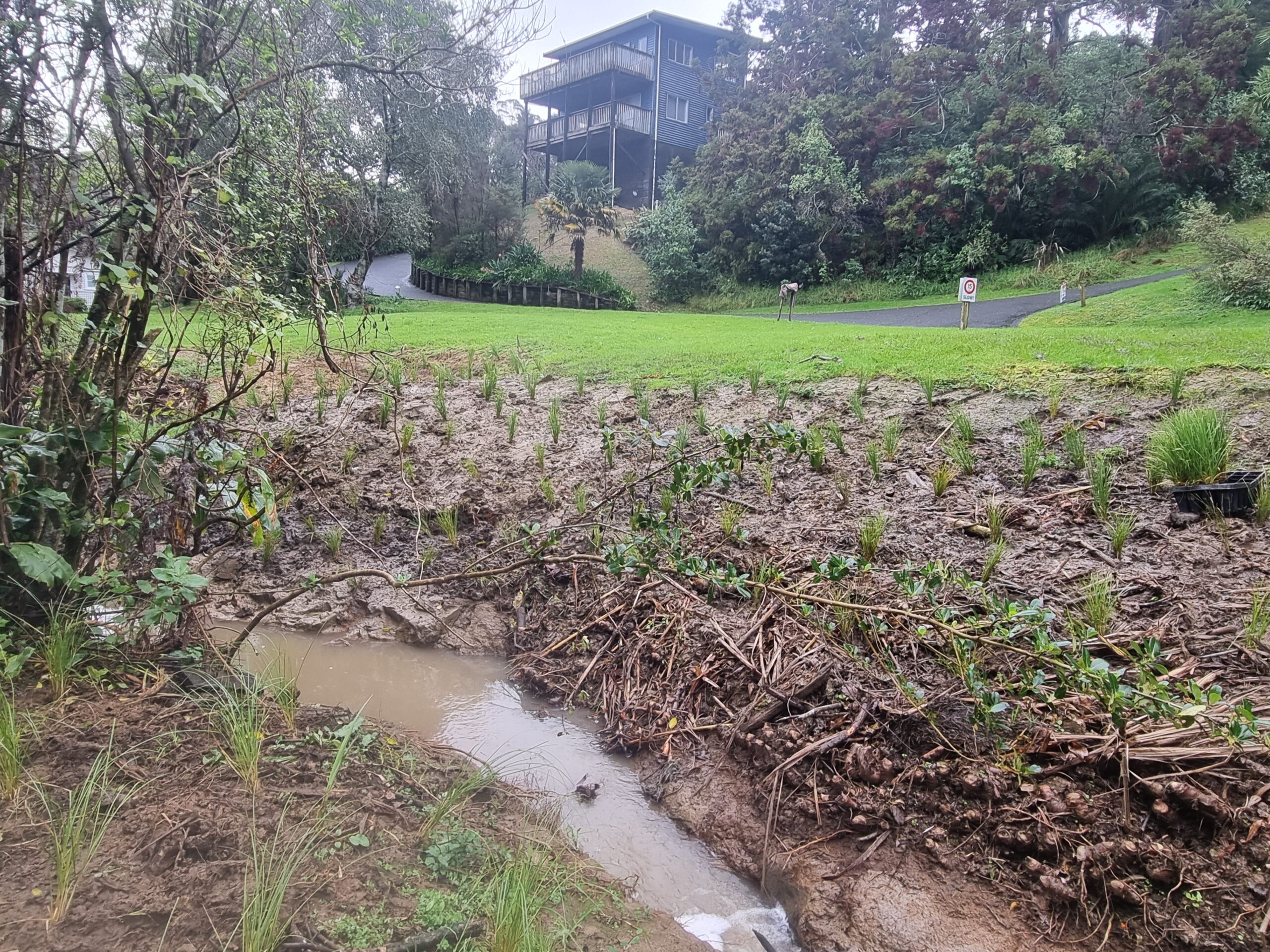
When people look at a weed-infested wetland or stream margin, the task of restoring it can seem overwhelming. That was certainly how things appeared at Redwoods, an 8.5-hectare property in Arkles Bay.
Redwoods consists of 17 privately owned lots surrounded by shared land that includes extensive native bush, a significant stand of kauri forest, wetlands, a stream, and a pond — including critically endangered gumland. As part of the property’s original development, the shared land was designated as a private site to protect these important natural features.
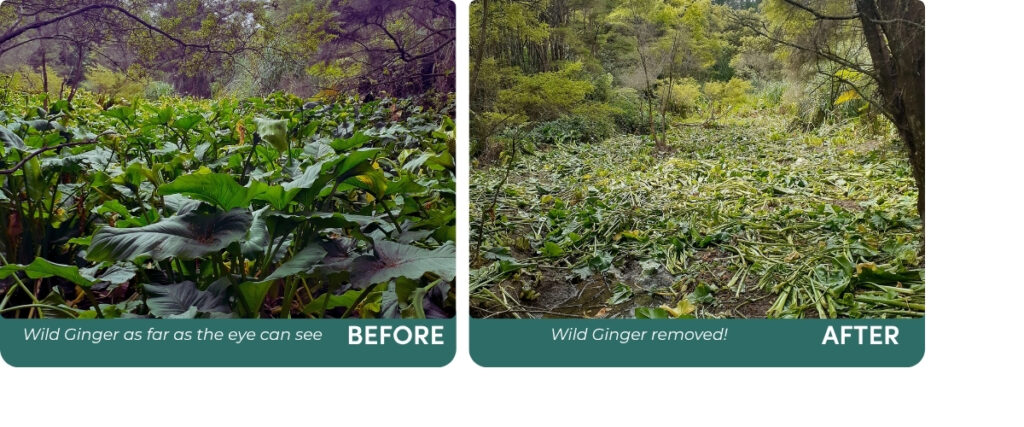
Three years ago, much of the wetland area was heavily infested with pest plants. Wild ginger and arum lily dominated large sections of the stream margins, while pampas grass, woolly nightshade, black nightshade, Japanese honeysuckle, and other invasive species had spread throughout the waterway. The scale of the problem made it difficult to know where to begin. Like many landowners, the Redwoods community simply chose an area and got started.
Their first attempt focused on a section of wetland heavily infested with mature ginger. A digger was used to clear the area, hoping to bury the rhizomes — but it soon became clear the approach wasn’t as effective as hoped. Fortunately, around this time the community connected with Restore Hibiscus and Bays restoration advisor Deborah Colson. That introduction changed everything.
Deborah worked alongside the residents to develop a practical restoration plan for the waterway and provided advice on managing weed-infested areas across the rest of the property. Once the plan was in place, RHB helped source funding for native plants for revegetation and helped the community approach the project in manageable stages.
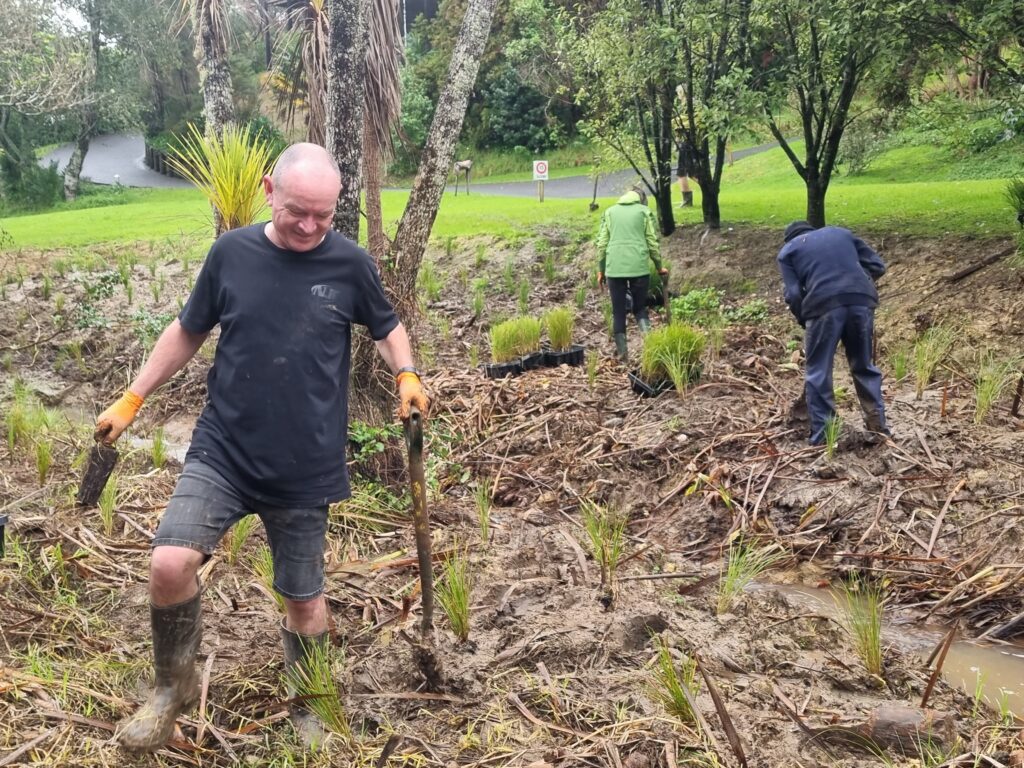
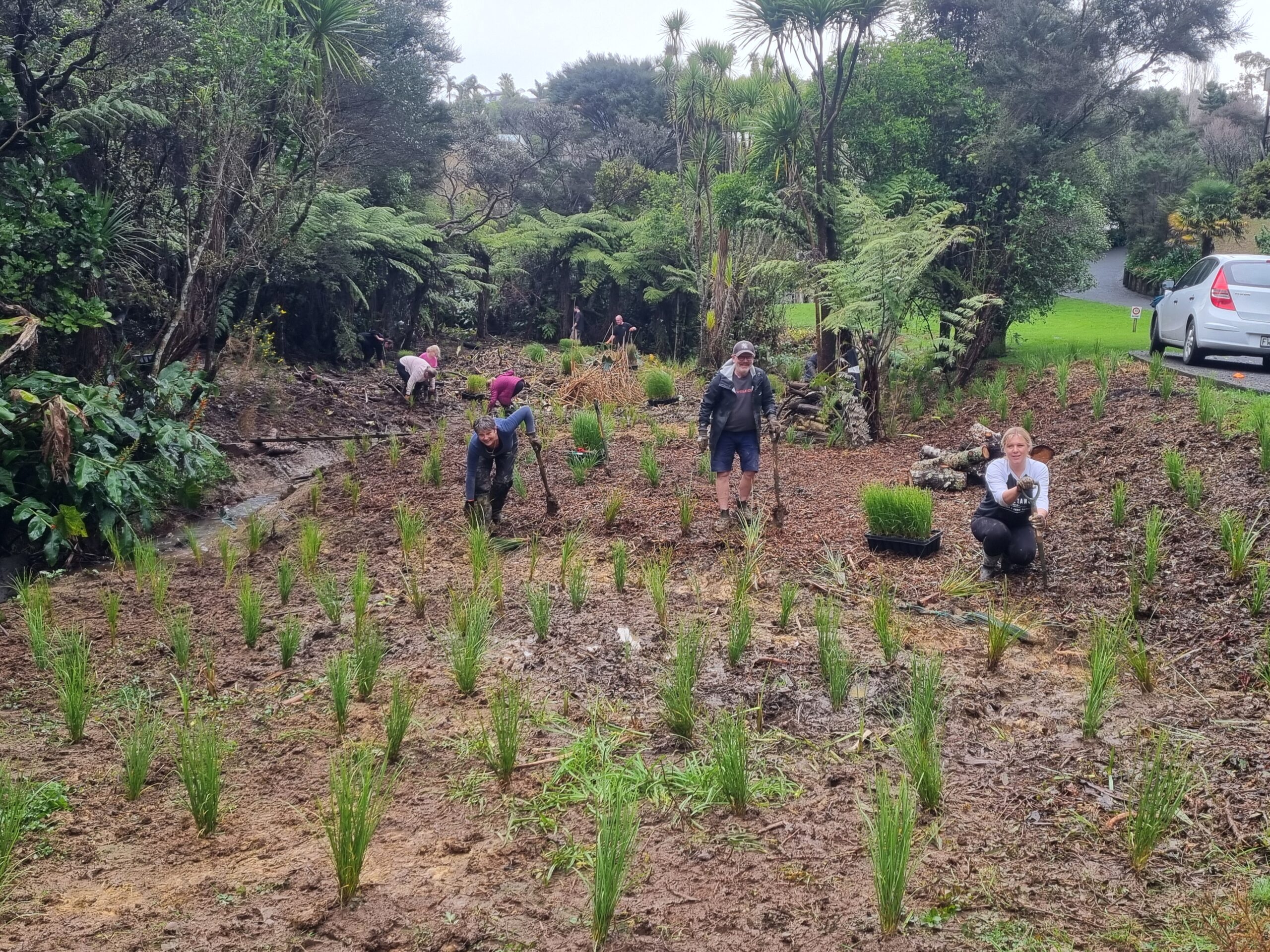
The first planting day was memorable. The ground was wet and muddy, a few people ended up stuck, and there were one or two unexpected encounters with the stream. But there was plenty of laughter, and more importantly, it brought the community together and created a genuine shared ownership of the restoration effort.
The results were visible surprisingly quickly. The newly planted area sits beside the main access road, so residents could see the transformation every day. As the native plants established and flourished, enthusiasm for the project grew. What had once been a weed-choked wetland was beginning to look like a functioning native ecosystem again.
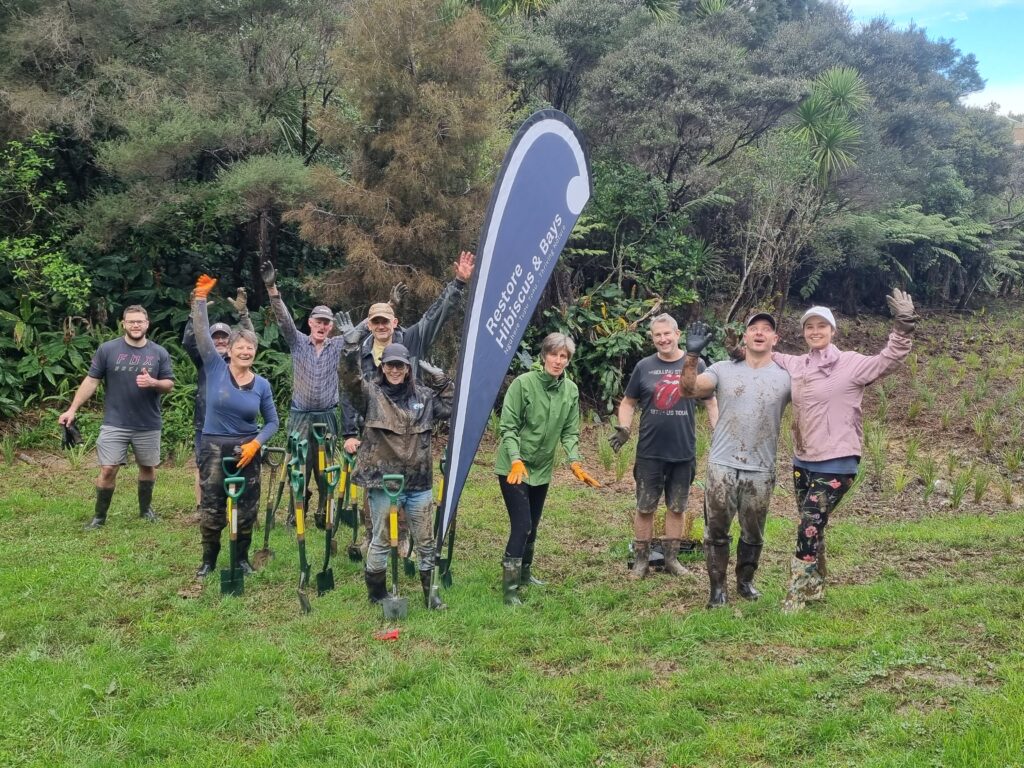
Encouraged by that early success, the community adopted a simple strategy: tackle the project one section at a time. The stream and wetland system extends around 600 to 700 metres through the property, with some areas up to 12 metres wide. Rather than trying to do everything at once, they started at the upstream end and worked steadily downstream. Monthly working bees gave residents a manageable way to contribute, and participation increased as people saw the progress being made.
The project also encouraged collaboration beyond the site boundaries. Neighbouring landowners began restoration work on their own properties, while others allowed access to restore stream margins adjoining theirs — extending the environmental benefits well beyond the Redwoods site.
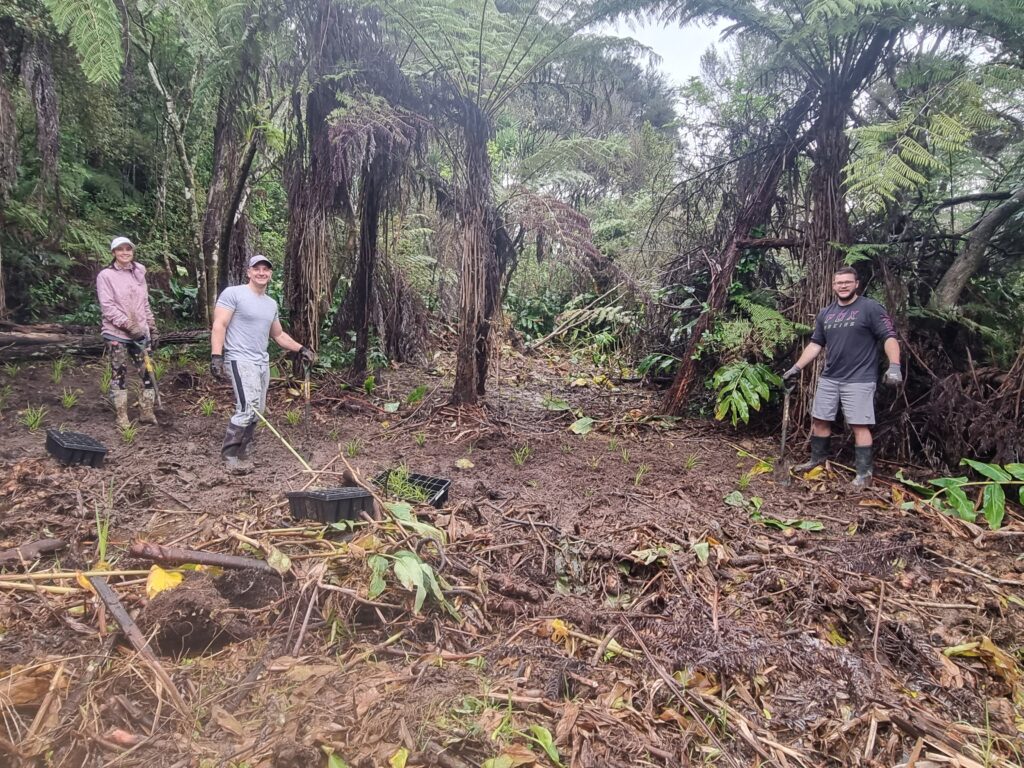
Throughout the project, RHB has provided ongoing support: practical advice, weed-control products, tools, planting plans, and thousands of native plants. In one particularly challenging area, they arranged for an eco-contractor to tackle what had become an almost impenetrable jungle of weeds.
Today the transformation is remarkable. Large areas once dominated by invasive species are now thriving with native vegetation. Weed regrowth is steadily reducing as established natives provide natural suppression. Residents are increasingly taking on weed control within their own sections, and the ecological health of the valley continues to improve.
Perhaps the most important lesson from the Redwoods project is that successful restoration doesn’t require a perfect plan, specialist knowledge, or a large budget from day one. It starts with a willingness to begin. By breaking the work into manageable pieces and taking advantage of the guidance and support available, the community has achieved far more than seemed possible.
There are many properties throughout the Hibiscus Coast and Bays area facing similar challenges — invasive weeds, degraded waterways, neglected bush. If that sounds familiar, Redwoods is proof that meaningful change is achievable.
Restore Hibiscus and Bays can provide the advice, resources, and support to get you started. The hardest part is often taking that first step. Once you do, the results can be transformative — not only for the environment, but for the people and communities connected to it.